Bathtub Installation: What to Prepare Before the Tub Arrives
Water points, drainage, waterproofing, tiling and removing the old tub: what to have ready so bathtub installation goes smoothly.

Why preparation decides how installation goes
Bathtub installation is usually the quick part. The slow part is everything that has to be ready before the tub arrives: water points in the right place, a drain that lines up, a floor that is level and waterproofed, and an old tub that is already out of the way.
When these are planned early, fitting the tub is straightforward. When they are not, the installer may have to stop and wait for a plumber or tiler, or the tub may end up sitting slightly off where you wanted it.
This guide covers what to prepare for both freestanding and built-in bathtubs. If you have not settled on a type yet, our comparison of freestanding vs built-in bathtubs is a good place to start.
Water points: hot and cold supply
Every bathtub needs a water supply, and where it comes from depends on the tap you choose. This is the decision to make first, because it fixes where pipes go in the wall or floor.
Wall-mounted and deck-mounted taps
A wall-mounted bathtub faucet needs hot and cold points in the wall at the right height above the rim. A deck-mounted tap sits on the tub edge or a tiled ledge, so the pipes come up behind or beside the tub. In both cases, the points should be roughed in before tiling.
Floor-standing mixers
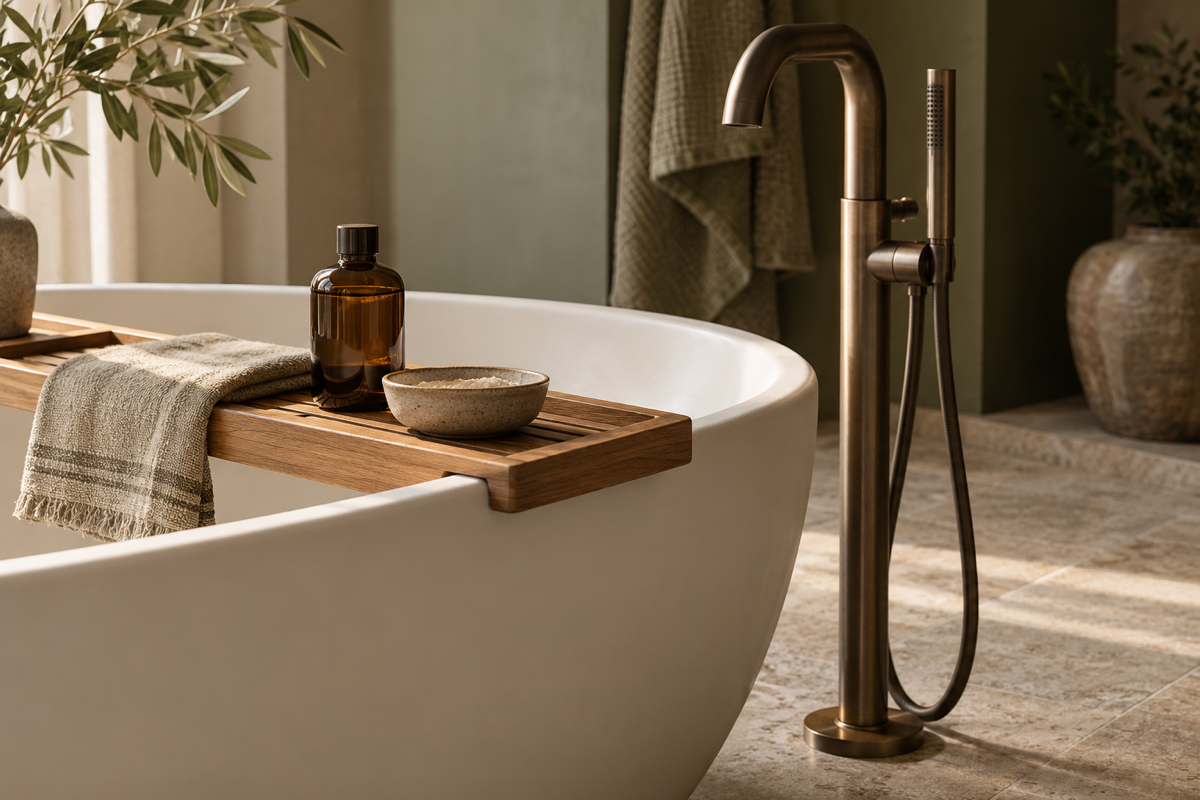
A floor-standing mixer beside a freestanding bathtub needs its supply pipes brought up through the floor at the exact spot where the mixer will stand. This must be done before the floor is screeded and tiled. Moving it later usually means breaking tiles. Our guide to choosing a bathtub mixer explains the options.
Hot water capacity
A bathtub holds far more water than a shower uses. If you rely on an instant water heater, the flow may be too low to fill a tub with hot water comfortably. Many homes with a bathtub use a storage water heater instead. Check this with your plumber or electrician early, as it can affect wiring and wall space.
Drainage: waste outlet and floor trap
The bathtub's waste outlet has to connect cleanly to the drain. Getting this right is the main reason to plan the tub position before any tiling starts.
Where the outlet sits
Waste outlets are usually at one end of the tub, though some freestanding tubs have a centre drain. Find out where the outlet is on the tub you are considering and mark that position on the floor plan.
Floor trap and fall
- For a freestanding tub, the drain point in the floor should sit directly under or very close to the tub's outlet, often hidden beneath the tub.
- For a built-in tub, the waste connects under the tub inside the enclosure, so the drain can be slightly offset.
- Keep a floor trap in the bathroom floor itself, so splashes and overflow have somewhere to go.
- Make sure the floor falls towards the drain, not away from it.
Pop-up wastes and overflows
Many tubs use a pop-up waste and an overflow. Check which parts come with the tub and which are bought separately, so nothing is missing on the day. Our bathtub accessories guide covers these parts.
Floor, waterproofing and tiling
A bathtub filled with water and a person is heavy, so the floor has to be sound and level. Waterproofing matters as much as the tiles you see.
Level and strength
Check that the floor is level where the tub will stand. Freestanding tubs usually have adjustable feet or a flat base, but they cannot correct a badly sloping floor. If you are choosing a heavy material such as stone resin or cast iron in an upstairs room, it is worth asking a contractor to confirm the floor can take the load.
Waterproofing first
A waterproofing membrane should go down before tiling, turned up the walls around the bathtub area. This protects the room below, which is especially important in condominiums.
Built-in bathtubs
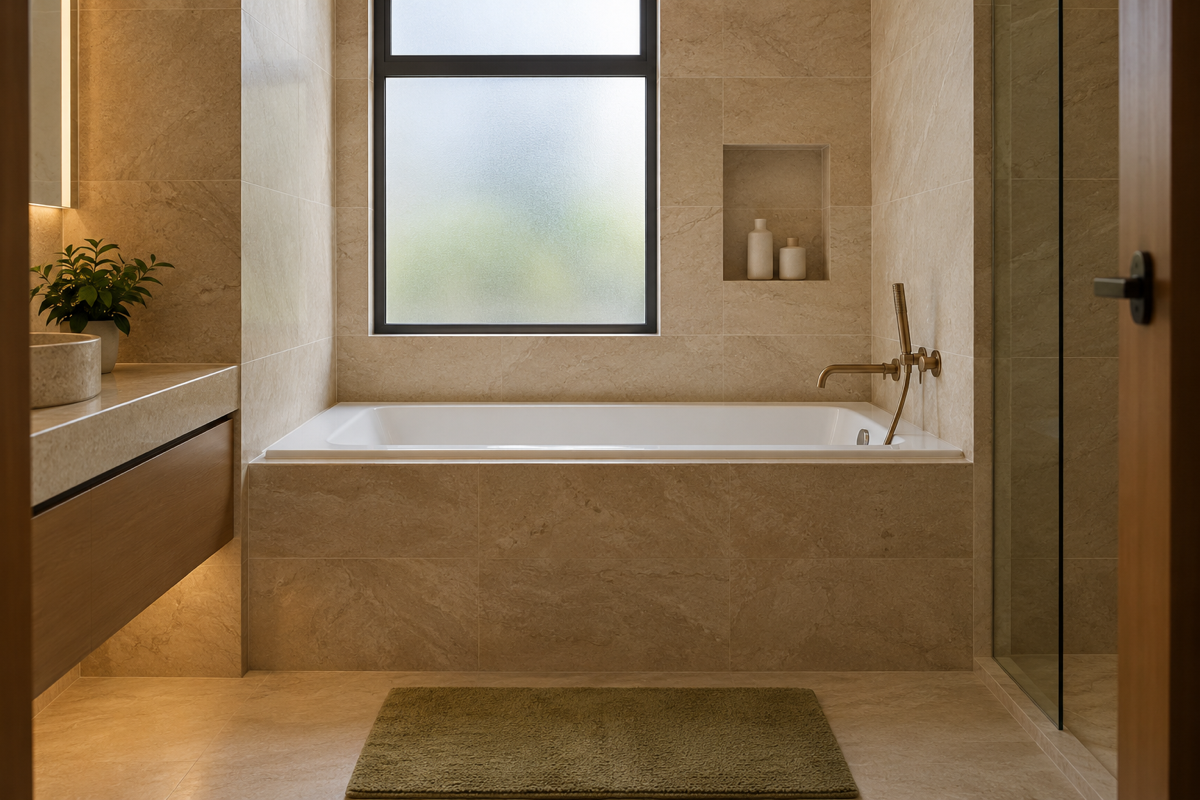
- A built-in bathtub sits in an alcove or on a support frame or brick plinth, with a tiled apron in front.
- Leave a removable access panel in the apron so the waste and pipes can be reached later.
- Agree with your tiler whether the wall tiles go down to the tub rim or behind it.
Freestanding bathtubs
For a freestanding tub, the floor tiles are usually finished first, and the tub is placed on top. Plan a clear gap around the tub for cleaning, and keep it away from walls far enough to reach the back.
Removing the old bathtub
If you are replacing an existing tub, plan its removal before the new one arrives.
What removal usually involves
- Shutting off the water and disconnecting the old waste and taps.
- Breaking out the tiled apron or support, if the old tub is built in.
- Carrying the old tub out along the same route the new one comes in.
- Clearing and disposing of the debris.
After the old tub is out
Removing a built-in tub often reveals damaged tiles, old pipes or a weak waterproofing layer. This is a good time to repair those before the new tub goes in. In condominiums, check the management rules on renovation hours and debris disposal. If you are not sure who should handle removal, tell us when you send your measurements and we will confirm the installation scope for your address. Our condo delivery checklist covers the route in and out.
A simple preparation checklist
- Choose the bathtub type and tap style.
- Mark the tub position, waste outlet and tap points on a floor plan.
- Rough in the hot and cold water points and the drain.
- Confirm hot water capacity.
- Apply waterproofing, then tile.
- Remove the old tub, if any, and repair what is found underneath.
- Measure the finished space again before delivery.
We deliver nationwide across Peninsular Malaysia, Sabah and Sarawak, and installation is offered. Installation scope, delivery charges and timing are confirmed on WhatsApp per address after you send measurements and photos. See our delivery section, or the location pages for Kuala Lumpur, Johor Bahru and Kuching.

Send your bathroom details on WhatsApp
The easiest way to prepare is to check early. Measure the bathroom, take photos of the walls, floor and any existing tub, and send them to us on WhatsApp. We will look at where your water points and drain sit and let you know what needs to be ready before installation.
Still choosing a tub? Browse our bathtubs and use the measuring guide before you send your details.