Floor-Standing, Wall or Deck Mixer: Choosing a Bathtub Faucet
Floor-standing, wall or deck-mounted? How to choose a bathtub faucet that suits your tub, your plumbing and your renovation stage.
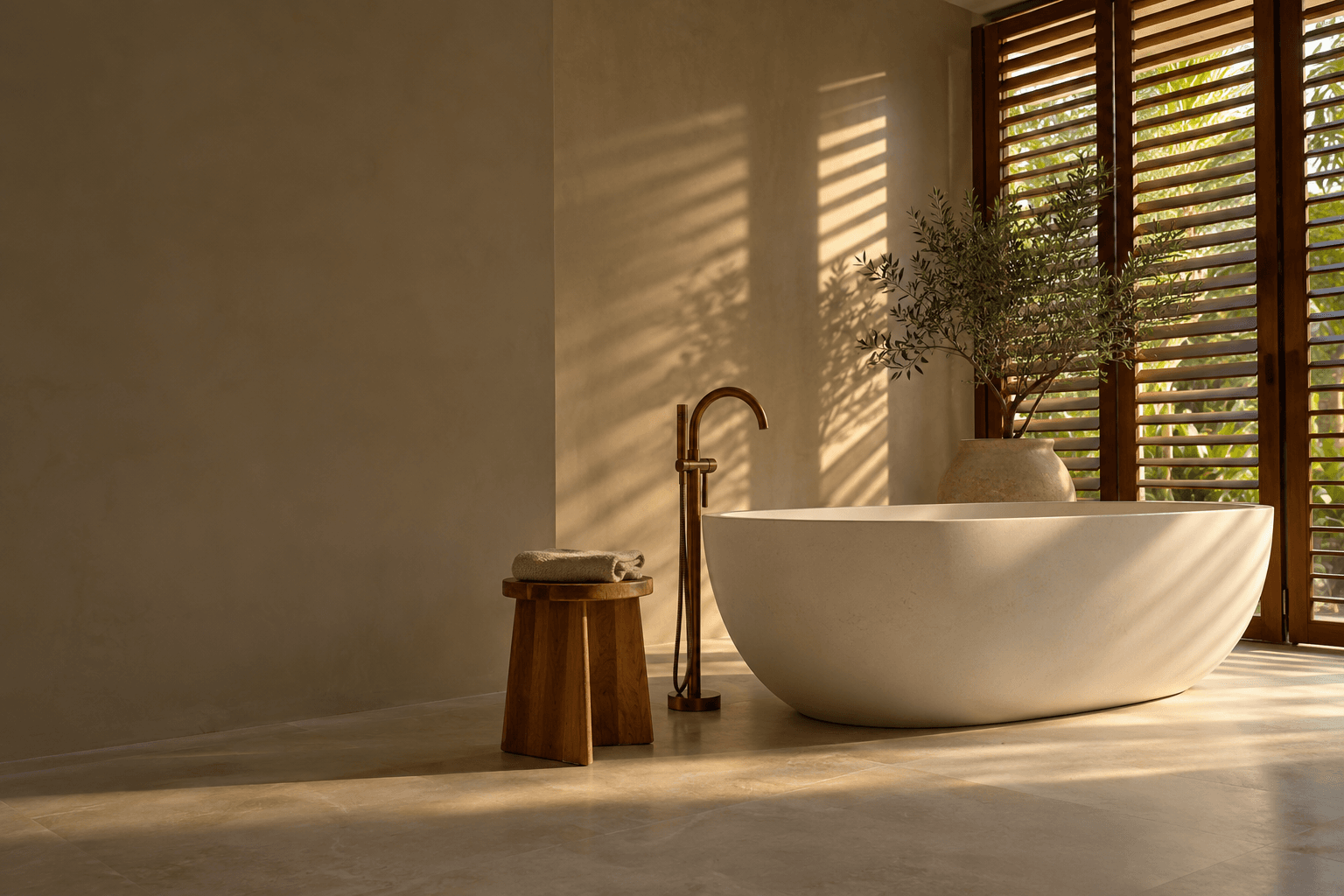
Why the tap matters as much as the tub
Most people spend weeks choosing a bathtub and a few minutes choosing the tap. Yet the bathtub faucet decides where the water points sit, how the tub is positioned, and how comfortable it is to fill and use every day.
There are three main ways to bring water to a bathtub: a floor-standing mixer beside the tub, a wall-mounted mixer above the rim, or a deck-mounted mixer on the tub edge or a tiled ledge. Each one suits a different type of bathtub and a different stage of renovation.
This guide walks through all three, what each needs from your plumbing, and the questions to settle before your contractor starts chasing walls or cutting into the floor.
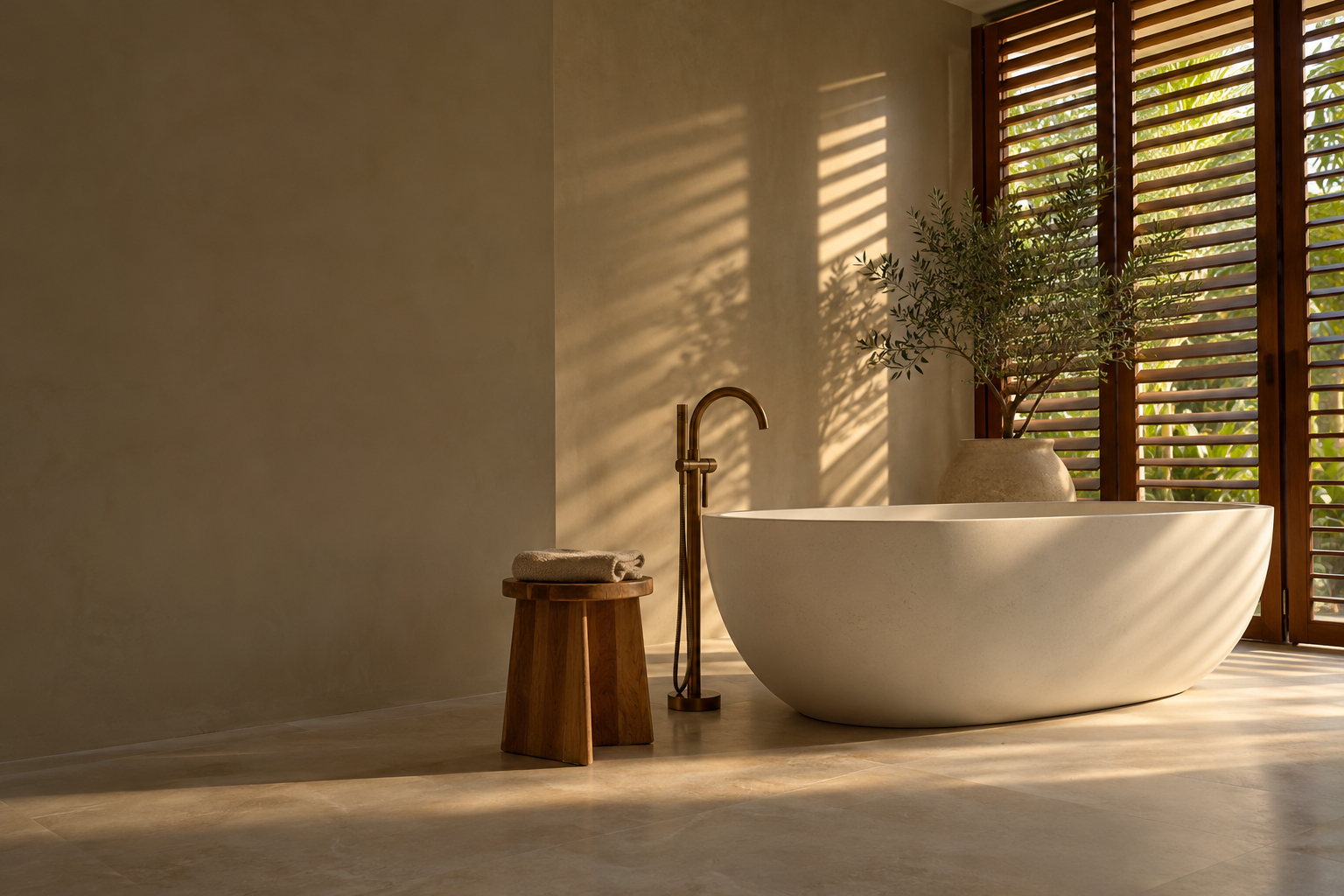
Floor-standing mixers
A floor-standing mixer is a tall, free-standing tap that rises from the floor beside the bathtub. It is the natural partner for a freestanding bathtub, because the tub does not touch a wall that could carry the pipes.
Where it works best
Choose a floor-standing mixer when the tub sits in the middle of the room, under a window, or anywhere a wall tap would be too far away to reach the rim. It also works for a tub placed against a glass wall or a feature wall you would rather not open up.
- The spout usually arches over the rim, so check its reach against the tub's rim width.
- Most models include a hand shower on a holder, which is useful for rinsing the tub and your hair.
- The finish becomes a visible design piece; bronze, brushed nickel and matte black are common choices.
What it needs from the floor
The hot and cold supply lines must come up through the floor at the exact spot where the mixer stands. On a ground floor this means running pipes in the screed; in a condo it may mean running them through the slab or a raised platform. Plan this before tiling, because moving the point later means breaking tiles.
Many floor-standing mixers also need a solid fixing kit set into the floor so the column does not wobble. Ask your plumber to fit it at the same time as the pipes.
Wall-mounted mixers
A wall-mounted mixer has its body hidden in the wall, with only the spout and handles showing. It is the most common option for a built in bathtub set into an alcove, where the tub already has walls on three sides.
Concealed versus exposed
A concealed mixer keeps the valve inside the wall, which gives a clean look and makes the bathroom easier to wipe down. It does, however, need enough wall depth for the valve body and an access plan if parts ever need replacing. An exposed bar mixer sits on the wall surface and is simpler to fit during a light refresh, when you do not want to hack the tiles.
Getting the height and reach right
The spout should clear the rim and land the water inside the tub, not on the edge. As a rough rule, many installers set the spout somewhere between 150 mm and 250 mm above the rim, but the correct figure depends on the tub's depth and the spout's projection. Measure the rim height and the distance from the wall to the inside edge before you fix the valve.
- A longer spout projection suits tubs with a wide rim or a sloped back.
- Place the handles where you can reach them from outside the tub, so you can set the temperature before stepping in.
- If a shower is planned over the tub too, a diverter can share the same valve.
Deck-mounted mixers
A deck-mounted mixer sits on a flat surface: either holes drilled into the tub rim or a tiled ledge built around the tub. It is popular for built-in and drop-in bathtubs with a wide surround.
Rim holes or a tiled ledge
Some acrylic bathtubs can be drilled for tap holes, while many stone resin and freestanding tubs cannot, or should not be. If the tub has no tap holes, a tiled ledge or platform gives the mixer a stable base without touching the tub shell.
Things to check before drilling
- Confirm the rim is wide and flat enough to hold the mixer body and handles.
- Leave room underneath for hoses and fittings, plus an access panel if the tub is enclosed.
- Check that the spout reaches past the rim, especially on deep soaking tubs.
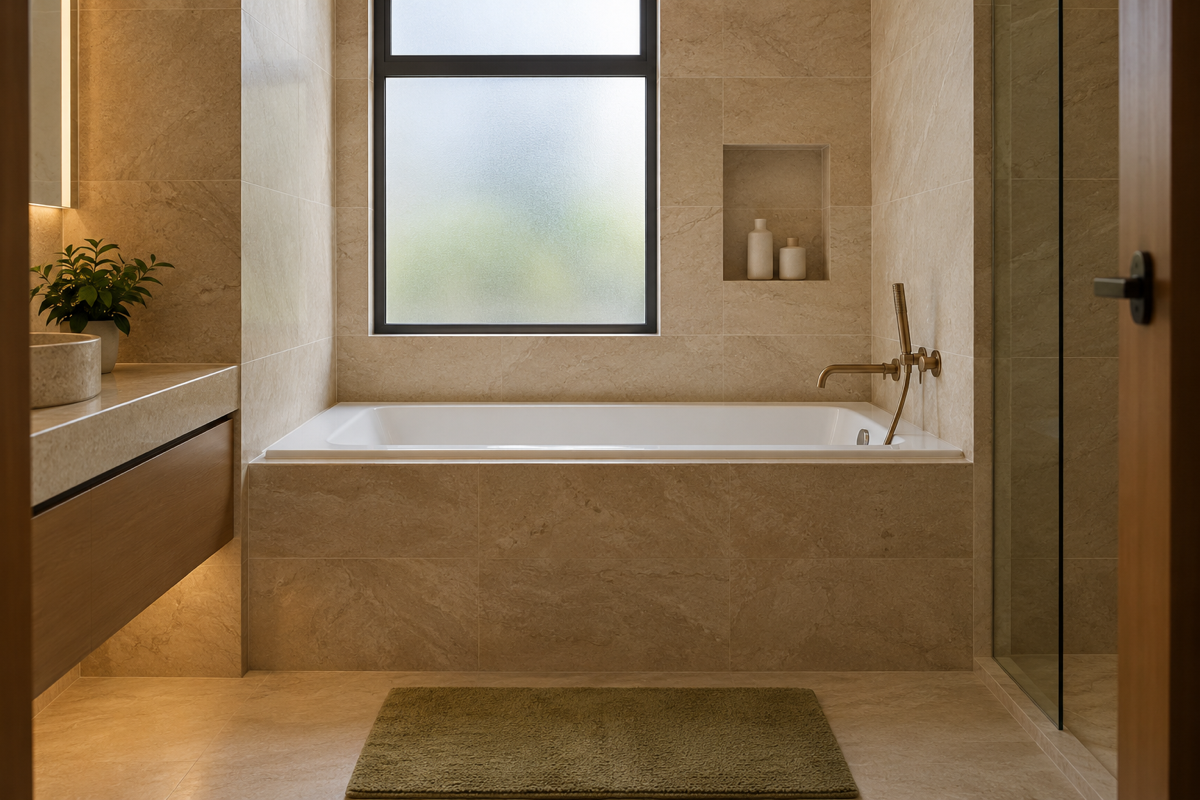
Matching the mixer to your bathtub and plumbing
The right choice usually follows from two questions: where the tub stands, and how much of the bathroom you are willing to open up.
| Bathtub type | Usual mixer | Main plumbing work |
|---|---|---|
| Freestanding, away from walls | Floor-standing | Supply lines through the floor |
| Freestanding, against a wall | Wall-mounted or floor-standing | Wall chase or floor points |
| Built-in alcove | Wall-mounted | Concealed valve in the wall |
| Drop-in with tiled surround | Deck-mounted | Pipes under the ledge, access panel |
Water pressure and hot water
Filling a soaking tub takes a lot of hot water at once. Check that your water heater can keep up with the tub's volume, and tell your plumber whether you use an instant heater or a storage heater. Low pressure on upper floors can also make filling slow, which matters more than people expect.
Waste and overflow
The mixer is only half the plumbing. Freestanding tubs usually drain through a waste in the base to a floor trap, while built-in tubs connect beneath the apron. Our installation preparation guide covers water points, floor traps and tiling in more detail, and the bathtub accessories guide explains pop-up wastes.
Order of work
- Choose the bathtub first, then the mixer, so the pipe positions match the real tub.
- Mark the tub outline on the floor before the plumber runs any pipes.
- Pressure-test the lines before tiling covers them.
Use the measuring guide on our homepage to record the room and rim dimensions before you decide.
Send us your measurements on WhatsApp
If you are unsure which mixer suits your bathtub, send us your bathroom measurements and a few photos of the walls and floor where the tub will go. We will talk through the options and confirm delivery and installation scope for your address.
We deliver nationwide, including Kuala Lumpur, Johor Bahru and Kuching. You can read more about delivery and installation, or simply message us on WhatsApp with your measurements.