Bathtub Size Guide: How to Measure Your Bathroom Before Buying
Common bathtub sizes in Malaysia and a step-by-step way to measure your bathroom, plumbing points and delivery route before you buy.
Why bathtub size matters before you buy
Most bathtub regrets start with a tape measure that came out too late. A tub that looks generous in a showroom can crowd a condominium bathroom, block a door swing or sit awkwardly against a window. A tub that is too short can feel cramped every time you lie back.
This guide walks through common bathtub sizes, how to measure your bathroom properly, and the plumbing and access points to check first. If you would rather browse while you read, start with our bathtub collections.
None of this needs special tools. A metal tape measure, your phone camera and about twenty minutes are enough to get a reliable set of numbers.
Common bathtub sizes in Malaysia
There is no single standard bathtub size, but most tubs fall into a few familiar ranges. The figures below are typical industry ranges, not fixed rules, so always check the exact dimensions of the tub you are considering.
| Type | Typical length | Typical width | Good for |
|---|---|---|---|
| Built-in (alcove) | around 1.5–1.7 m | around 70–80 cm | Standard bathrooms with three walls around the tub |
| Freestanding | around 1.5–1.8 m | around 70–90 cm | Larger bathrooms with open floor space |
| Compact or short | around 1.2–1.4 m | around 65–75 cm | Small bathrooms and upright, deeper soaking |
Built-in bathtubs
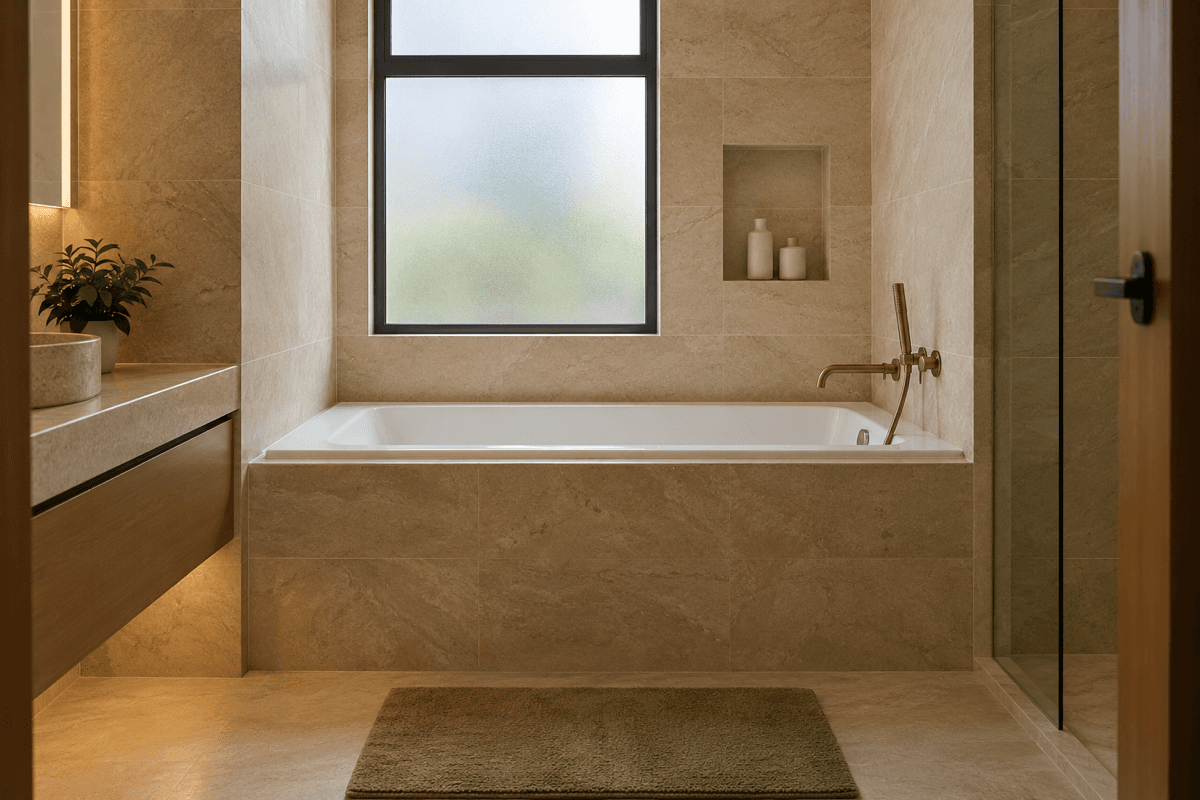
A built-in bathtub sits against one to three walls and is usually finished with a tiled or panelled apron. Because it fills a fixed recess, the length of that recess decides almost everything. Measure the alcove wall to wall, not just the old tub.
Freestanding bathtubs
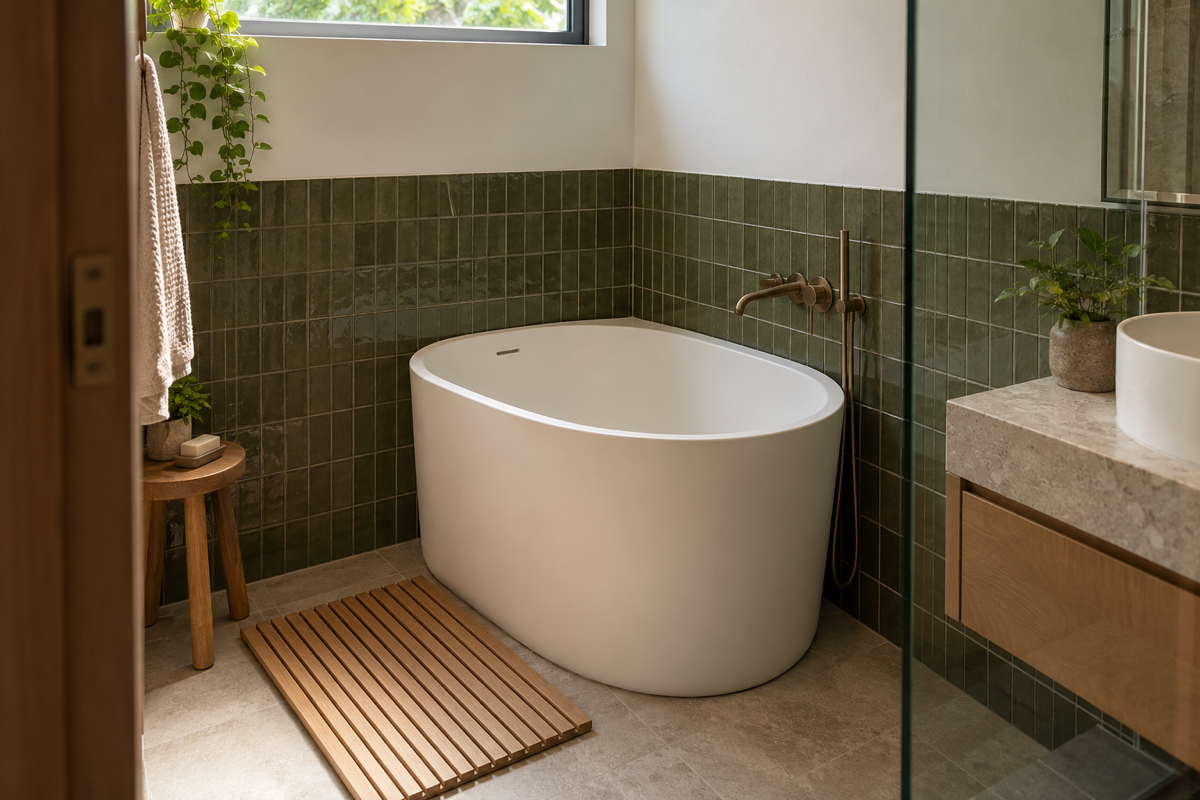
A freestanding bathtub stands on its own, so its footprint is only part of the picture. You also need clear floor around it for cleaning and for stepping in safely. A freestanding tub that fills the room edge to edge usually looks squeezed rather than calm.
Compact and soaking tubs
Shorter tubs often make up for length with depth. A compact soaking tub lets you sit more upright with water up to the shoulders, which suits small bathrooms well. Our guide to bathtubs for small bathrooms covers these options in more detail.
How to measure your bathroom
Measure in millimetres or centimetres and write every number down straight away. Take each measurement twice; walls in older homes are rarely perfectly square.
Floor space and recess
- Length and width of the whole bathroom, wall to wall.
- For a built-in tub: the length and depth of the recess at floor level and at about knee height.
- Any steps, kerbs or raised wet areas where the tub will sit.
Clearance around the tub
Leave room to step in and out comfortably and to reach the tub with a cloth. For freestanding tubs, many designers leave a gap from the walls so the sides can be cleaned. Check that the bathroom door, cabinet doors and any shower screen can still open fully.
Height, windows and fittings
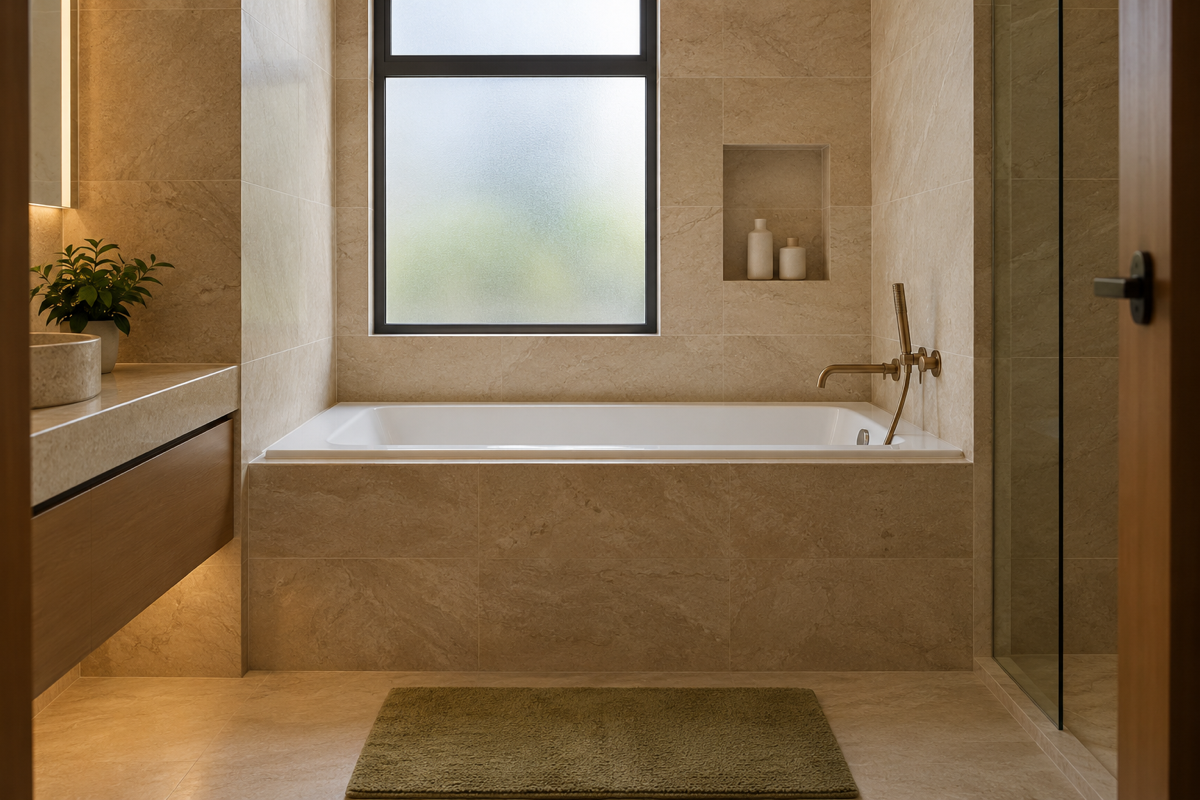
Note the height of window sills, wall-mounted taps, shelves and power points. A tub rim that ends just below a window sill or a towel rail can look deliberate; one that clashes with it rarely does.
Our homepage has a short measuring checklist you can keep open on your phone while you work.
Plumbing and floor points to check
Size is only half of the fit. The tub also has to line up with water supply and drainage, and these are much harder to move than furniture.
Water inlets and tap position
Find where the hot and cold water points come out today. A built-in tub usually uses a wall or deck-mounted tap, while a freestanding tub often uses a floor-standing mixer, which needs pipes coming up through the floor.
Floor trap and waste outlet
Mark the floor trap position and measure its distance from two walls. The waste outlet on the tub must connect to it without long, flat pipe runs that drain slowly.
Floor level and fall
Many Malaysian bathrooms have a floor that slopes towards the trap. A small fall is normal, but a strong slope may need levelling feet or a little preparation work before the tub goes in.
Getting the bathtub into the room
A tub that fits the bathroom still has to travel there. This step is easy to forget and is where many deliveries get stuck.
Lift, staircase and corridor
- Lift door width and internal depth, if you live in a condominium or apartment.
- Staircase width and any tight turns or low beams in landed homes.
- Corridor width and the tightest corner on the route.
Doors
Measure the clear opening of every door on the way, with the door fully open. Bathroom doors are often narrower than bedroom doors, and a tub can sometimes be tilted through a gap that it cannot pass flat.
Delivery is available across Peninsular Malaysia, Sabah and Sarawak, whether you are in Kuala Lumpur, Johor Bahru or Kuching. See how delivery and installation are arranged.
Matching bathtub size to how you bathe
Once you know what fits, choose for comfort. Two tubs with the same footprint can feel very different once filled.
Length versus depth
A longer tub lets taller people stretch out. A deeper tub covers more of the body in a shorter length. If you mainly soak to relax at the end of the day, depth can matter more than length.
Who will use it
Think about children, older parents and guests. A lower rim is easier to step over, and a flat base feels steadier underfoot. If the tub is for a homestay or guest room, simple and sturdy usually works best.
Not sure which shape suits you? Try the bathtub finder on our homepage.
Send us your measurements
When you have your numbers, send them to us with a few photos of the bathroom, the door and the route in. Include the recess size, floor trap position and where the water points are.
We will reply with tubs that fit and confirm delivery charges, timing and installation scope for your address. Send your measurements on WhatsApp and we will take it from there.